Karl & Niamh, 36 & 34
Chicago, IL
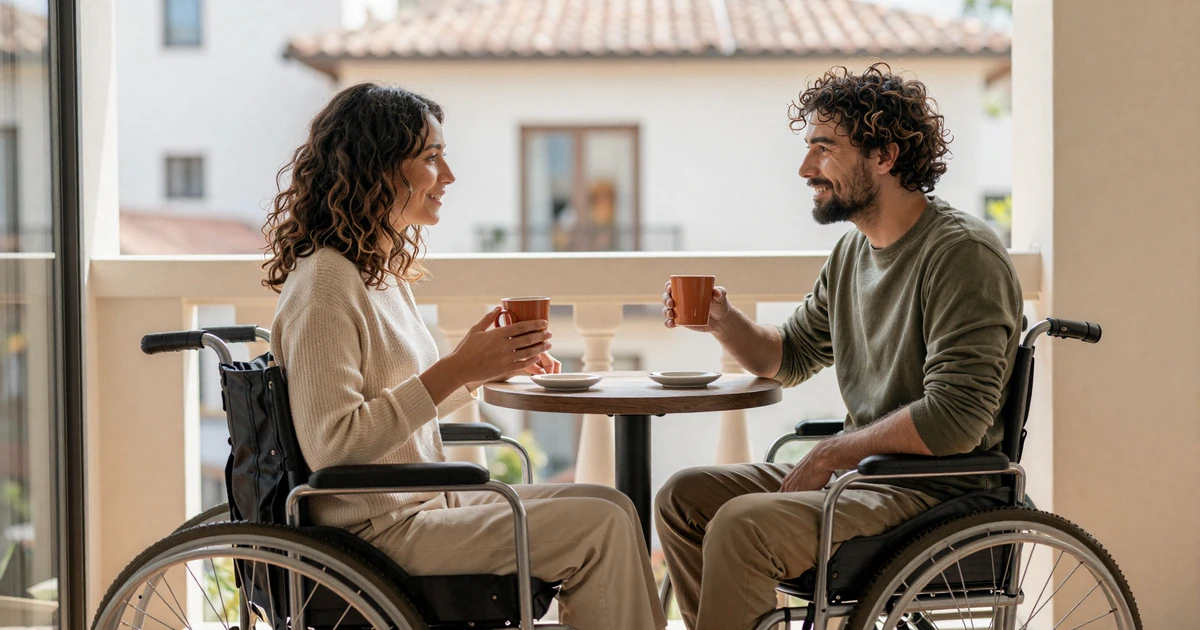
Karl plans every date with accessibility first - ramps checked, accessible bathrooms mapped, quiet back-row seats booked. Niamh says it is the most thoughtful dating she has ever experienced.
These are the kinds of stories members tell us after they've met. Interabled couples. Autistic partnerships. Deaf and hearing pairs. Love that stayed after a mid-life diagnosis. A long-distance match that closed nine hundred miles. No swipe fatigue - just slow, intentional connection.
Between 40% and 60% of disabled adults report chronic social isolation, a pattern that mainstream dating apps often deepen rather than fix (PMC qualitative analysis, 2024). Niche, disability-specific platforms help because they remove the two biggest barriers at once: physical inaccessibility and the social tax of explaining yourself to every new match.
The stories below come from members of easy dating and peer platforms like Dateability and AbiliMatch. Names are real with permission; photos are shared with consent. Each couple moved at their own pace - weeks, months, sometimes longer. None of them started with a swipe.
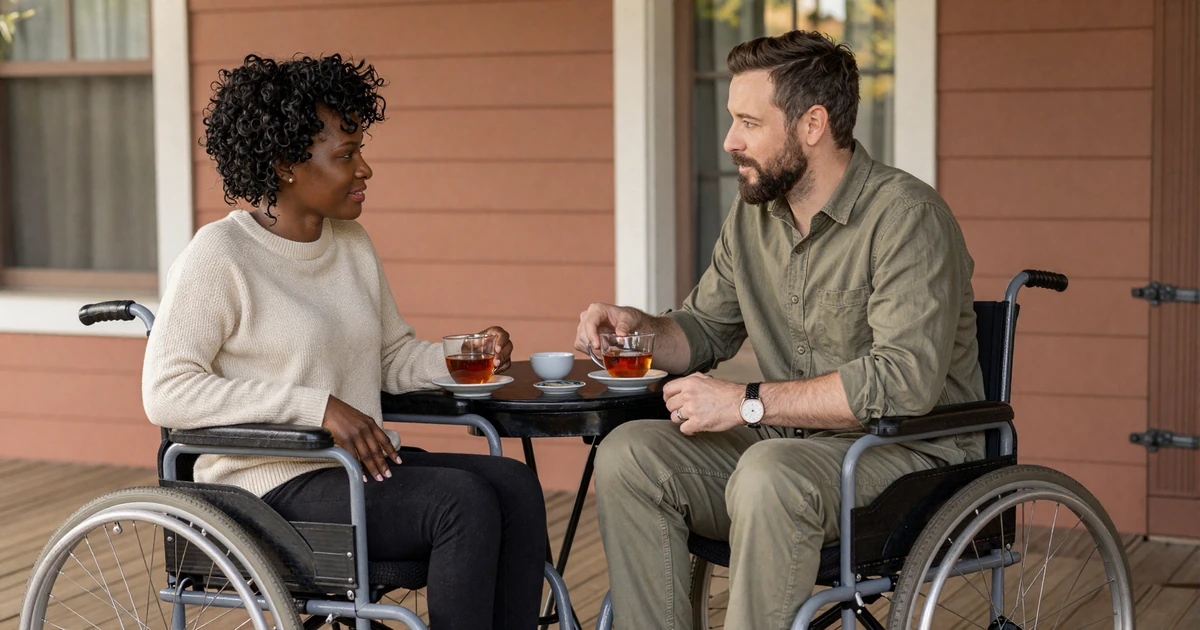
Karl is a power-chair user. Niamh is ambulatory. They met through a community forum, then messaged for six weeks before their first in-person date at a step-free art gallery.
Chicago, IL
Karl plans every date with accessibility first - ramps checked, accessible bathrooms mapped, quiet back-row seats booked. Niamh says it is the most thoughtful dating she has ever experienced.
Karl credits the wheelchair dating community with teaching him that logistics is a love language. He pre-checks ramp access, accessible toilets, and seating before suggesting a venue - the same kind of planning the Reeve Foundation recommends for any date with a wheelchair user.
Their first date was a museum (guaranteed ADA-compliant), followed by coffee at a step-free bookshop. The third date was a comedy show with accessible seating. Niamh told us the thing that sealed it was small: Karl sent a text the night before their first meeting with the bathroom layout and the quickest step-free path from the parking lot.
"He did not make his wheelchair a conversation I had to start. He just lived his life in front of me, and I got to fall in love with how he moves through the world." - Niamh, 34, matched through easy dating in 2025
Jordan and Theo both identify as autistic and met after a month of long-form written messages. Their first in-person date was a quiet weekday lunch at a sensory-friendly café.
As an autistic guy, the first dates always went sideways because I would miss some social cue and get ghosted. Here, the mood tags and written profiles told me more in five minutes than five dates ever did. We met in person after a month of slow messages. That was two years ago.

Autistic adults bring real strengths to dating: honesty, loyalty, directness, and the kind of straightforwardness that cuts through neurotypical guesswork. Jordan and Theo practiced explicit consent from the first date ("Is it okay if I hold your hand?") and built a shared rule: info-dumping about a special interest is not a problem to solve - it is a gift to receive. Their autism dating category page has the full communication playbook.
Priya is culturally Deaf and fluent in ASL. Ryan is hearing. Their first exchange was a video message - Ryan had practiced a short sign for a week before sending it.
Deaf and hard-of-hearing singles can absolutely date hearing partners. What Priya and Ryan found, and what members of our Deaf community echo, is that success is not about sign-language fluency on day one - it is about openness to the partner's preferred style and the patience to mix ASL, lip-reading, captioned video, and written messages as each conversation requires.
Ryan enrolled in a community ASL class after their second date. Priya taught him the signs that mattered most first: her name, coffee, tired, I love you. They got engaged in January 2026.
"He did not treat my language like a novelty or a hurdle. He treated it like something worth learning because I was worth learning." - Priya, 27, Brooklyn, NY

Brooklyn, NY
Engaged in January 2026 after eighteen months together. Mix ASL, captioned video, and voice notes depending on the moment. Ryan is in his third ASL class.
Not every story starts on a dating platform. Some begin mid-life, after a diagnosis reshapes a relationship that was already underway. Feinstein and her husband are one of those stories.
Epilepsy arrived eleven years into our marriage. We had to learn a new rhythm - ask for help instead of pushing through, grieve the spontaneity we had lost, and build new kinds of intimacy around shared care. Therapy helped. Humor helped more. He still makes me laugh at three a.m. when the meds are wearing off.
When disability arrives partway through a relationship, both partners renegotiate the rhythms that once ran on spontaneity. Couples therapists guiding this transition point to three principles: grieve the changes together (acknowledging loss creates closeness), stay curious, not critical (ask what your partner needs now, not what they used to need), and redefine intimacy through shared care, trust, and humor. For more, see our epilepsy dating guide and our article on communication in disabled relationships.
Hannah and Marcus lived 900 miles apart. They matched the week Hannah joined, dated long-distance for a year, and moved in together after the holidays - a story first told publicly in Dateability's 2024 press materials and echoed by couples on our own platform since.
Ohio / Tennessee
Matched in 2024. Dated long-distance for a year with weekly video dates and one weekend visit a month. Moved in over the 2024 holidays. Still dates intentionally - Thursday is long-conversation night.
Hannah told us the thing that made the distance survivable was the same thing that made the platform worth using: the absence of hurry. "I was not performing for an algorithm. I was writing long messages to one person, and he was writing long messages back."
Long-distance dating with a disability has its own texture - the logistics of accessible travel, the meds that have to be timed for flights, the days when a flare means a visit gets rescheduled. Hannah and Marcus built a shared document of accessible hotels, restaurants with step-free access, and the quiet places between their two cities that worked for both of their bodies. Our long-distance communication guide covers more of the practical side.
"Isolation and distance would have kept us strangers forever. We needed a platform that assumed disability from the start. Otherwise we were just another inbox that nobody answered." - Hannah, 30, Ohio
Not every story ends in a wedding, and we do not pretend otherwise. Special Bridge has argued for years that dating success should be defined more widely than "did this become a relationship" - and we agree. Success can also be practicing honest disclosure for the first time, noticing a red flag early enough to walk away, having one good conversation with someone who gets it, making a friend who understands your diagnosis, or simply learning what pace your body and mind can sustain.
If you would like to read about the day-to-day mechanics that make these stories possible, start with how easy dating actually works and our notes on safety and privacy. If you want to read more member-written stories, our real stories blog post collects a wider set.