PTSD & C-PTSD Community

Dating with PTSD and C-PTSD, at a pace that feels safe

A dating site for adults carrying post-traumatic stress - veterans, survivors of assault or abuse, first responders, people with complex trauma from long-term harm. Free forever. Verified profiles. No pressure to explain, perform, or "get over it" before you are allowed to be loved. Approximately 8% of people who live through trauma go on to develop PTSD, and most of them still want, and deserve, warm company.

Skip to therapies
  • Trauma-aware
  • Verified
  • Your timeline
  • Consistent
Couple sitting together quietly on a linen sofa with warm mugs - calm trauma-aware dating connection
Clarity first

PTSD and C-PTSD, explained simply

PTSD and complex PTSD are related but distinct. PTSD is a mental health condition that typically follows a singular traumatic event - a car accident, assault, a combat deployment, a single disaster. Complex PTSD (C-PTSD) is caused by recurring or chronic traumatic events over a long period, often in childhood or in a relationship where escape was not possible. C-PTSD was acknowledged by the International Classification of Diseases 11th Revision (ICD-11) in 2018, though it is not yet recognized in the DSM-5. The everyday texture of each condition in dating is different enough to matter.

What it looks like PTSD Complex PTSD (C-PTSD)
Typical cause A single traumatic event - combat, assault, accident, disaster Recurring or chronic trauma - childhood abuse, domestic violence, trafficking, long-term captivity
Core symptoms Flashbacks, hypervigilance, avoidance, irritability, nightmares All PTSD symptoms plus deep distrust, emotional disconnection, negative self-concept, unstable relationships
Effect on dating Startle responses, avoidance of trauma-linked cues, episodic shutdowns Chronic difficulty trusting, repeating unhealthy patterns, self-isolation even when desiring closeness
Diagnostic recognition DSM-5 and ICD-11 ICD-11 only; not yet in DSM-5
Common evidence-based therapies EMDR, Cognitive Processing Therapy, Prolonged Exposure EMDR, CPT, trauma-informed attachment work, Cognitive-Behavioral Conjoint Therapy for couples

The VA's National Center for PTSD notes that "man-made" traumas - abuse, assault, combat - tend to have more severe relationship effects than natural disasters, because they leave a specific kind of lasting distrust: the knowledge that another human chose to do this. That distrust is not a flaw. It is a protective response that, in dating, asks to be met with patience rather than performance.

Knowing the landscape

Triggers and trauma responses in dating

Triggers bring a traumatized person back to the feelings of the original trauma. They are not drama. They are the nervous system doing what it was trained to do. A partner who understands this does not need to walk on eggshells - they need to know the map.

Sensory triggers

Certain tones of voice, volumes, phrases, smells, or sudden loud noises can pull the body into a trauma state before the thinking brain arrives. Fireworks for some veterans. A specific cologne for some survivors. It is rarely logical and always real.

Relational triggers

Conflict, raised voices, particular communication styles, or acts of intimacy can activate protective shutdowns or panic. Silence during an argument is often a freeze response, not indifference. Flinching at a reached-for hand is not about the hand.

Calendar triggers

Holidays and anniversaries - the anniversary of a loss, a deployment, an assault, a family event - often spike symptoms even years later. Marking these dates privately allows a partner to be gently closer, not farther, on hard weeks.

Fight, flight, freeze, fawn

The four classic trauma responses show up in dating as arguing loudly, leaving mid-conflict, going numb and silent, or over-accommodating to keep the peace. None of them are manipulation. All of them have roots older than this relationship.

Hypervigilance

Scanning a room for exits, reading tiny changes in tone, waking at every sound. Hypervigilance is exhausting for the person living in it and can feel, to an unaware partner, like distrust. It is self-protection on autopilot.

Emotional distance

Withdrawal and apparent coldness are often protective shutdowns, not feelings about the partner. The VA's research frames this bluntly: PTSD symptoms can resemble emotional distance but reflect protection, not absence of love.

Slow is the point

Trust-building through consistency

Complex PTSD is often rooted in betrayal by the people who were supposed to keep a child or partner safe. That origin creates four common relationship patterns: distrust of a partner's stated intentions, emotional disconnection that shuts down vulnerable feelings to avoid overwhelm, unhealthy relationship cycles that gravitate toward familiar turbulence because it mirrors the original model of love, and self-isolation that withdraws to stay safe even when closeness is deeply wanted.

None of these are repaired by grand gestures. They are repaired by small consistent proof, over time, that this person is safe. The phrase trauma therapists use most often is "corrective experience" - hundreds of tiny moments where a partner does the non-dramatic thing they said they would do.

"Trust is not rebuilt by promises. It is rebuilt by showing up on an ordinary Tuesday, exactly when you said you would, without being asked." - Reflection from a trauma therapist in our community

Consistency looks small and boring and enormous: replying to a text within a reasonable window, keeping standing plans, flagging if you will be late, not raising your voice when frustrated, apologizing cleanly and changing behavior afterward. This is why our gentle-pace onboarding encourages messaging at your own rhythm rather than pushing for same-night meets.


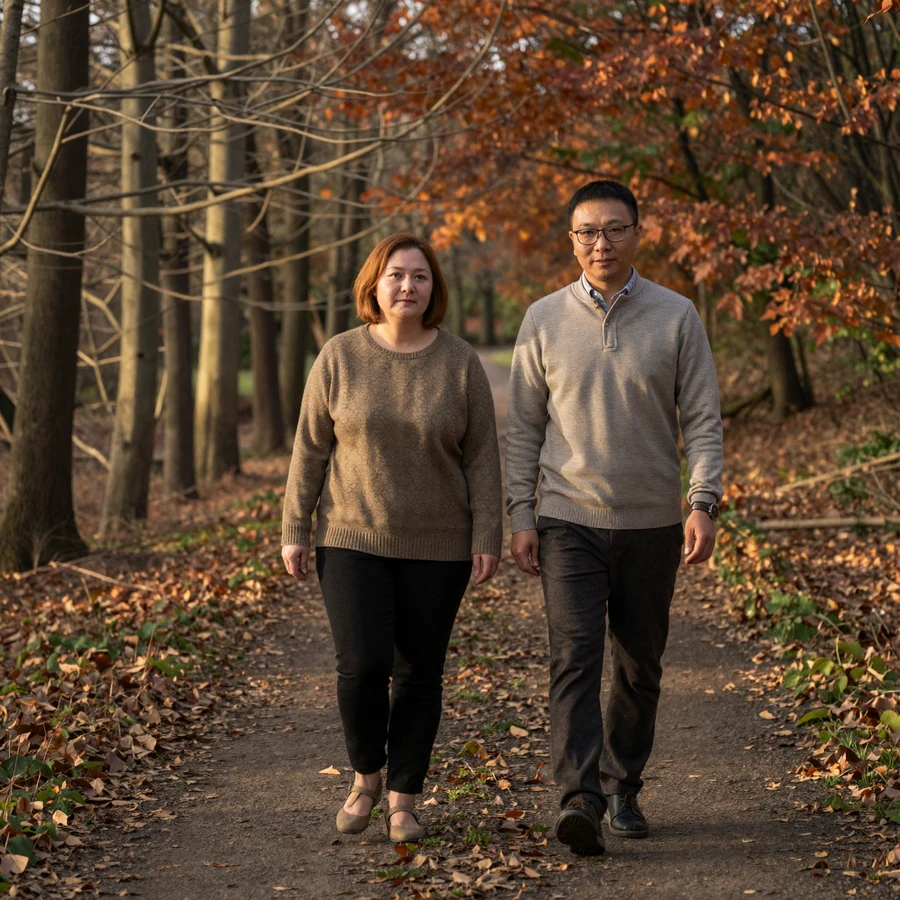
Couple walking quietly on a wooded path in autumn - consistent unhurried connection after trauma
What the research supports

Evidence-based therapies that support dating

Healing does not require therapy as a prerequisite for dating. Many members are dating and healing at the same time, or in different sequences. But members who are curious about what the clinical evidence actually supports often ask for a short, honest list. These four therapies have the strongest research base for PTSD and C-PTSD, and each of them tends to show up meaningfully in relationship quality within months, not years.

  1. Eye Movement Desensitization and Reprocessing (EMDR)

    EMDR uses structured bilateral stimulation - eye movements, taps, or tones - while a client holds a traumatic memory in mind, allowing the brain to reprocess the memory so it no longer fires the full alarm. For dating, the practical effect is usually reduced trigger reactivity: the same cue that used to cause a shutdown becomes a smaller, more manageable ripple. EMDR is one of the VA's three recommended first-line therapies for PTSD.

  2. Cognitive Processing Therapy (CPT)

    CPT directly challenges the "stuck" negative beliefs trauma installs - "I am unlovable," "the world is not safe," "I should have stopped it." In dating, this is often the quieter win: the voice that used to sabotage every promising connection loses some of its volume, and the person becomes able to accept warmth without immediately suspecting it.

  3. Cognitive-Behavioral Conjoint Therapy (CBCT)

    CBCT is built specifically for couples in which one partner has PTSD. Unlike generalist couples therapy, its explicit goal is both symptom reduction and relationship improvement - at once. For members in new relationships who want to invest together rather than individually, it is often the single most useful referral we make.

  4. Trauma-informed attachment work

    For C-PTSD in particular, where the trauma is relational, attachment-focused therapies (including IFS and sensorimotor approaches) can address the four core patterns - distrust, disconnection, unhealthy cycles, self-isolation - at their source. Slower-moving than EMDR or CPT, often more durable for chronic trauma.

Finding a trauma-trained therapist matters more than the specific modality. Our emotional compatibility guide covers what to look for in a provider and how to talk about therapy with a new partner without treating it as confession.

For the partner

Partner self-care without withdrawing

If you are dating someone with PTSD or C-PTSD, the most useful thing you can know is this: you cannot support a partner from an empty tank. Loving someone through trauma work is meaningful and slow, and secondary traumatic stress is a real thing. The five strategies below are drawn directly from trauma-specialist guidance for partners.

Five things that actually help

  • Do not minimize. Validate the feeling, then reassure safety. "That sounds really scary. You are safe right now. I am here." Skip the "but it is over now" - the nervous system does not agree with you yet.
  • Be patient. Trauma recovery is non-linear. A good month does not mean the condition is gone; a bad week does not mean progress was fake. Some symptoms may persist for life, and love is still possible.
  • Be consistent in words and actions. This is the single biggest trust lever. What you say you will do, do. What you cannot do, say so early. Reliability is intimacy to a traumatized nervous system.
  • See the bigger picture. Most reactions that feel personal are the past firing, not a verdict on you. "This is about the past, not us" - said internally - protects both of you.
  • Take care of yourself. Your own therapist, your own friendships, your own rest. The members whose partners stay long-term are almost always partners who were not required to be the whole support system.

A boundary that deserves naming plainly: PTSD is not an excuse for emotional, physical, or sexual abuse. Both partners retain the right to safety and respect. Trauma explains a great deal; it does not license harm. If a relationship has crossed that line, our safety and privacy page includes resources and reporting tools.

Featured members

Featured community members

A few of the adults currently on easy dating - real members, illustrative photos, shared with consent.

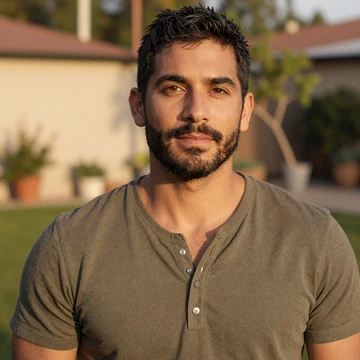
Jordan, a veteran community member, smiling gently in a backyard garden at golden hour

Jordan, 42

Combat veteran, PTSD · San Antonio, TX

Army vet, now a carpenter. Four years into EMDR. Looking for someone who likes long walks, early mornings, and dogs.

  • Veteran
  • Steady
  • Outdoorsy
Samira, a C-PTSD community member, reflective by a sunlit window with houseplants

Samira, 31

C-PTSD · Seattle, WA

Tech writer, late-diagnosed. Into quiet bookstores, slow texting, and not explaining myself on the first date.

  • C-PTSD
  • Patient
  • Introvert
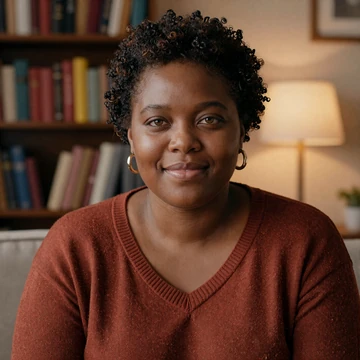
Rhea, a PTSD community member, smiling softly in a cozy home library

Rhea, 37

PTSD + anxiety · Philadelphia, PA

Social worker, survivor, dog parent. Three years into CPT. Big on clear communication and small joys.

  • Survivor
  • Thoughtful
  • Dog parent

Read longer success stories from trauma-aware couples →

Questions & answers

PTSD dating questions

The questions we hear most from members joining a trauma-aware dating site for the first time.

  • Can I date while I still have PTSD symptoms?

    Yes. Approximately 8% of people who experience trauma develop PTSD, and most of them date successfully. You do not need to be "fully healed" to deserve companionship. Dating during active symptoms does ask for a specific kind of partner - one willing to learn your triggers, keep plans consistently, and not treat your nervous system as a flaw. Many members do therapy and dating concurrently and report that a safe relationship actively supports recovery.

  • When should I disclose my PTSD to someone I am dating?

    There is no single right moment, but most members find a short early mention works better than a long-delayed reveal. A line like "I live with PTSD, and that means I may need a quieter second date" on date two or three gives a partner real information without turning the conversation into a medical briefing. Save the full story for when trust is earned - it is yours, not a ticket to entry.

  • Is dating a veteran with PTSD different?

    The core principles are the same - consistency, patience, learning triggers, taking care of yourself - but combat-related PTSD can have specific textures: hypervigilance in public spaces, aversion to crowds or fireworks, sleep disruption from deployment rhythms, and sometimes survivor guilt. Research shows that over 90% of Vietnam veterans with PTSD experienced significant relationship difficulties, yet many went on to build lasting marriages with informed partners. VA resources and veteran-spouse support groups exist specifically for this.

  • What is the difference between PTSD and C-PTSD in dating?

    PTSD typically follows a single traumatic event and shows up in dating as flashbacks, avoidance, and startle responses. C-PTSD follows chronic trauma, often from childhood or long-term abuse, and shows up in dating additionally as deep distrust, emotional disconnection, and repeating unhealthy relationship patterns. Both benefit from EMDR and CPT; C-PTSD often benefits additionally from attachment-focused therapy. C-PTSD is recognized in the ICD-11 but not yet in the DSM-5.

  • How do I support a partner during a trauma response?

    Do not minimize - validate the feeling and reassure safety out loud. Be patient; the response will pass. Be consistent in what you say and do, because reliability is how trust rebuilds. Remember the response is about the past, not you. And take care of yourself through your own support system. Ask your partner, during calm moments, what specifically helps them - a quiet room, a hand on the back, a reminder of today's date. Every nervous system answers differently.

  • Is PTSD ever an excuse for abusive behavior?

    No. PTSD explains a great deal about startle responses, shutdowns, and emotional reactions, but it does not license emotional, physical, or sexual abuse. Both partners retain the right to safety and respect. If a relationship has crossed that line, trauma history is context, not cover. Our safety and privacy page includes reporting tools and outside resources.

  • Is easy dating really free for PTSD members?

    Yes. Profile creation, messaging, verification, and all safety tools are free forever, with no credit card required. Optional premium verification badges exist for members who want an extra trust signal, but they are never required to meet anyone. Full pricing transparency is on our FAQ page.

Join Free and Move at Your Pace

A trauma-aware community that will not rush you, quiz you, or ask you to perform being okay.

Free forever · No credit card · Delete your account anytime