
Guide · Confidence

Confidence and self-acceptance when disabled and dating

Dr. Danielle Sheypuk calls it dateable self-esteem - the particular kind of confidence it takes to enter dating as a disabled adult without shrinking yourself first. This is a gentle, practical guide to building it.

  • Dateable self-esteem
  • Affirmations
  • Community
  • Ableism

Quick takeaways

  • Dateable self-esteem is a skill, not a personality trait - and it is specifically teachable.
  • Mirror affirmations work when they are specific, present-tense, and said out loud - not when they are vague or aspirational.
  • Community involvement is the fastest on-ramp to confidence: Baylor research finds disabled women have more enduring marriages than non-disabled peers.
  • Internalized ableism shows up as self-editing. Releasing it is a slow, repeated practice - not a single breakthrough.

What "dateable self-esteem" actually means

Dateable self-esteem is the specific form of confidence required to enter dating as a disabled adult with a positive self-image intact. The term was coined by Dr. Danielle Sheypuk, a wheelchair-using clinical psychologist who sits on the American Association of People with Disabilities board. It has four practical components: walking in with a positive self-image, accepting small gestures of help without feeling diminished, being honest and clear in communication, and setting boundaries that match your real comfort.

Here's why that definition matters for anyone who is disabled and dating. General self-esteem asks, "do I like myself?" Dateable self-esteem asks the harder follow-up: "do I believe I am a catch, knowing exactly what I bring and exactly what I need?" Those are different muscles. You can love your life, your career, your friendships, and still flinch when a match asks about your wheelchair, your hearing aids, or your meds. That flinch is not proof of anything except that this muscle hasn't been trained yet.

Confidence in dating is not the absence of disability. It is the refusal to apologize for it. - easy dating community member

The encouraging part: this is trainable. Research from Baylor College of Medicine found that disabled women are actually more likely to have enduring marriages than their non-disabled peers - a finding that quietly contradicts almost every cultural script about disability and love. The daters who get there didn't wake up fearless. They practiced a handful of small things, repeatedly. The rest of this guide is those things.
Practice · 5 minutes a day

Mirror affirmations that don't feel silly

Affirmations work when they are specific, present-tense, and emotionally embodied. They fail when they are vague, future-tense, and muttered at a phone screen. Read these out loud, in a mirror, slowly.

For asking someone out

"I am brave and I have the courage to ask this person on a date. My worth is not determined by their response." Say it before you open the app. Say it again after you hit send.

For disclosure moments

"I am sharing information about my body from a place of confidence, not apology. The right person will meet me here." This is the one Wheel:Life host Ali recommends pairing with the honest-but-discreet approach.

For after a hard day

"I am so grateful to be building a loving, respectful, and patient connection with a partner who values my whole self." Specific, present-tense, felt. That is what makes it land.

Three rules for affirmations that stick

  1. Present tense, not future. "I am" lands in the nervous system. "I will" keeps confidence permanently around the corner.
  2. Specific, not generic. "I deserve a partner who shows up on sick days" beats "I deserve love" every time.
  3. Felt, not mumbled. Say it until you can feel a small change in your shoulders. If nothing moves, rewrite the line.

Community involvement as confidence fuel

Between 40% and 60% of disabled adults report significant social isolation, according to qualitative research summarized in a PubMed Central analysis of niche dating platforms. That isolation is the single biggest input to low dating confidence - not the disability itself. Here's the thing: you cannot affirmation your way out of loneliness. You have to practice being around people again, on terms that feel safe.

Community involvement does three things at once. It gives you social reps in an environment where your body and brain are not the unusual thing in the room. It introduces you to potential partners and friends-of-friends who already understand disability culture. And it slowly rewrites the story that you have to earn a place at the table.

  • Disability-specific meetups and support groups. In-person or on Zoom. Look for ones that are social, not clinical - a Saturday coffee hour beats a symptoms check-in.
  • Adaptive sports and hobby clubs. Wheelchair rugby, blind hiking groups, Deaf book clubs, neurodivergent craft nights. Friendship first, romance sometimes, confidence always.
  • Volunteering for causes you care about. Accessibility advocacy, mutual aid, animal rescue, local politics. Showing up for something bigger than dating is the fastest route to feeling dateable again.
  • Online communities with real moderation. Reddit disability subs, Discord servers, and niche dating platforms. A moderated space where you don't have to explain yourself is a confidence gym.

You do not have to become an advocate, a public figure, or even a regular. Two hours a month in a room of people who get it is enough to move the needle. Our wheelchair dating community and autism dating category both double as community hubs for this reason.

Releasing internalized ableism, gently

Internalized ableism is what happens when the messages society sends about disabled bodies and minds take up residence inside you. Repeated rejection tied to stereotypes - being ghosted after disclosure, being called brave for dating, being asked intrusive questions on first meetings - teaches disabled daters to preemptively edit themselves. You start appearing "easier," "less needy," or "more normal" before anyone has even asked you to. That editing is the real obstacle, not the disability.

You don't release it in a single therapy session. You release it the way you'd release a muscle you didn't know was clenched - by noticing, naming, and softening, repeatedly. A few practices that members tell us help:

  1. Catch the self-edit in real time

    When you find yourself downplaying an access need on a first-date text - "oh, it's fine, we can do the stairs place, I'll manage" - pause. Ask: am I saying this because I want to, or because I'm afraid of being too much? Answer honestly. Rewrite the message.

  2. Reframe rejection as information, not verdict

    When a match loses interest over access needs, it isn't evidence you asked for too much. It's evidence they weren't equipped for reciprocity. Special Bridge reframes this specifically - the person asking for accommodation is not the problem; the person unwilling to meet it is.

  3. Collect counter-evidence on purpose

    Keep a private note on your phone titled "things people love about me." Add one thing every week - something a friend said, something you like about yourself, a moment you handled with grace. Read it before first dates. Internalized ableism thrives on selective memory.

  4. Let other disabled people be mirrors

    Spend time reading, watching, and listening to disabled writers, comedians, and couples. Love on the Spectrum, Down for Love, the Dateability app blog, and our own success stories all work. The pattern you'll see - ordinary joyful people dating ordinarily - slowly overwrites the pity script.

  5. Ask a therapist for the specific work, if you can

    Disability-affirming therapists are trained to work on internalized ableism directly. It is a named clinical concept, not a niche complaint. If budget is an issue, sliding-scale directories through NAMI and Open Path Collective can help.

From our members

Real-life confidence stories

Two members on what shifted for them - in their own words, lightly edited.

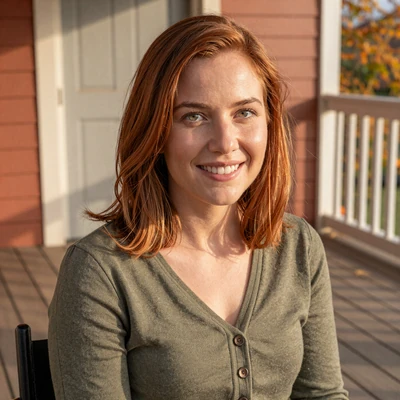
I spent five years convinced that dating meant performing an easier version of my cerebral palsy for whoever would tolerate it. The week I stopped apologizing in my opening message was the week my matches started showing up for real conversations. I wasn't harder to love - I was just finally visible.

Maya, a 31-year-old teacher with cerebral palsy, smiling on a wooden porch
Maya, 31 Teacher · Portland, OR

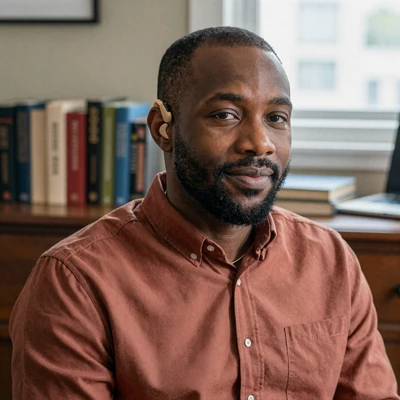
Dr. Feinstein wrote that love for her looks like takeout on flare days and a partner who knows where the emergency meds are. I used to read that and ache for it. Now it's my life. The shift wasn't finding a better partner. It was believing I was someone who got to have one.

Darius, a 38-year-old accessibility consultant, smiling in a warmly lit home office
Darius, 38 Accessibility consultant · Atlanta, GA
Keep reading

Three companion guides for building a dating life you don't have to shrink for.

Myths about disability and relationships

Debunking the asexuality myth, the "saint" framing, caregiver assumptions, and the other cultural scripts that eat at self-esteem.

Read the myth-buster

Real stories of inclusive love

Long-distance interabled couples, deaf-hearing love, acquired-disability partnerships - reshaping what you think is possible.

Read the stories

Inclusive dating advice (pillar)

Our full guide to disclosure timing, red flags, first-date planning, and finding love with a disability on your own terms.

Read the pillar guide

Read more real stories

Meet couples who built ordinary, unhurried love after a diagnosis, an acquired disability, or a long stretch of believing it wasn't for them.

Free to join · No credit card · Moderated community