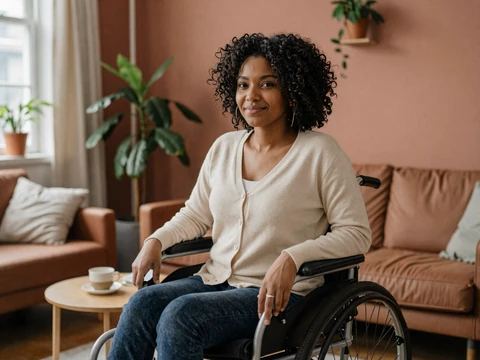
Maya, 32
Portland, OR
Poet, plant mom, and adaptive kayaker. Looking for someone who reads books slowly and likes long voice notes.
easy dating is where wheelchair users, Deaf singles, autistic adults, amputees, chronic illness warriors, and allies meet partners who value the whole of them - not the parts they've been told to hide. No swipe fatigue. No explaining. No pity. Just space for honest, unhurried love.
Free forever · No credit card · WCAG 2.1 AA compliant
Twenty-seven percent of American adults have a disability, yet the first-marriage rate for disabled adults aged 18-49 is just 24.4 per 1,000 - roughly half the national average of 48.9 (U.S. Department of Health & Human Services, 2025). That gap isn't about desire. It's about access, ableism, and dating apps that were never built with us in mind.
Most of our members arrived here after the same story: years on Tinder, Bumble, or Hinge. Unread messages. Profile photos cropped to hide a wheelchair. Ghosting the moment autism or epilepsy came up. Being called "brave" or "inspirational" for simply wanting a partner. A disabled dating site changes the starting point - disability is normalized from the first tap, so the emotional labor of disclosure shrinks to almost nothing.
"Dating while disabled isn't about finding someone who doesn't mind your condition. It's about finding someone who values the wholeness - the resilience, the humor, the depth." - paraphrased from Jessica Slice & Caroline Cupp, Dateable (2024)
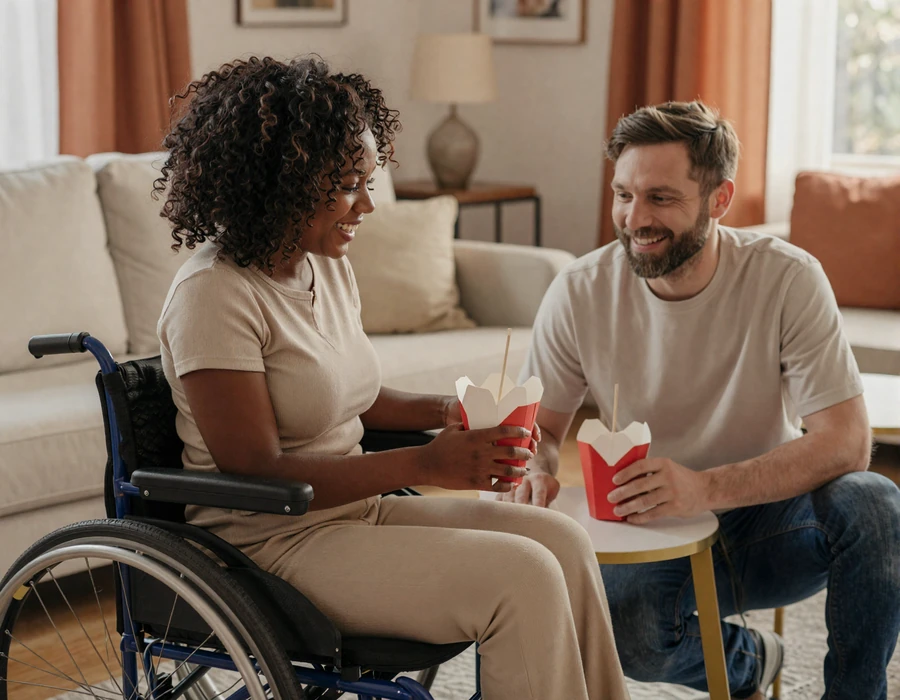
We built easy dating because love shouldn't require a performance of ability. It should look like takeout on flare days, laughter through uncertainty, and a partner who knows where the emergency meds are kept. Read our mission and founder story.
Real profiles from real people. Our community spans every disability, race, gender identity, sexuality, and relationship style - because the disability minority holds every other minority inside it.
Portland, OR
Poet, plant mom, and adaptive kayaker. Looking for someone who reads books slowly and likes long voice notes.
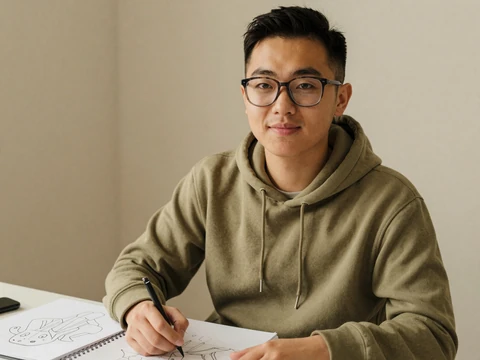
Austin, TX
Autistic and ADHD. Illustrator. Info-dumps about mycology are love languages. Hoping to meet another neurodivergent brain.
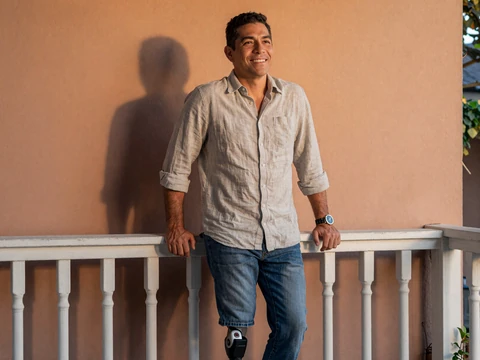
Miami, FL
BKA amputee ten years out. Former chef, now a community garden volunteer. Divorced dad. Looking for slow, steady love.
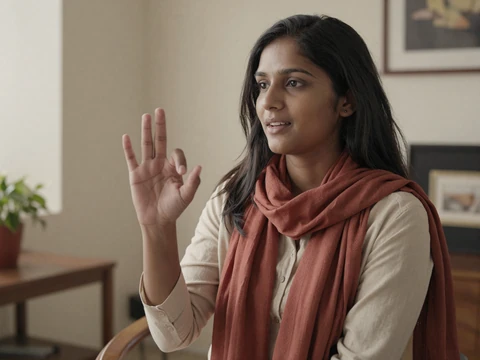
Brooklyn, NY
Deaf, proud, and fluent in ASL. Museum educator. Happy to date Deaf or hearing partners who want to learn.
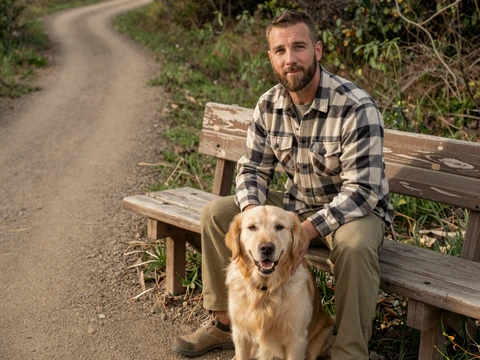
Denver, CO
Army vet, PTSD survivor, dog dad. In therapy and doing the work. Looking for someone patient and honest.
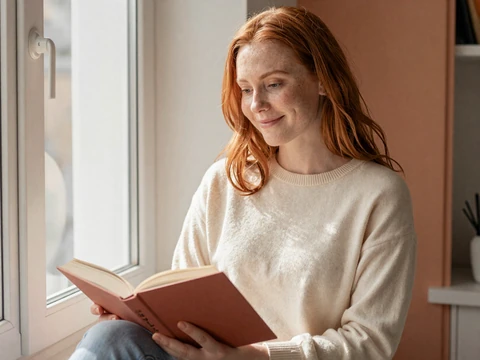
Chicago, IL
Librarian. Bipolar II, well-managed five years. Baking, birdwatching, and a soft spot for audiobooks on rainy days.
Successful inclusive disability dating platforms share a handful of non-negotiable design principles, drawn from community feedback and lived experience. Here are the six we build around.
Screen-reader compatibility, keyboard navigation, captions, high-contrast text, and large touch targets are built in from day one - not patched on later. We meet WCAG 2.1 AA standards and keep improving.
Share disability, communication preferences, and support needs only if you want to. Optional mood tags and a Dateability-style disclosure panel let you set the pace of what you reveal.
Every profile passes selfie-video verification with human review. That cuts catfishing and protects members from romance scams - a group the FBI reports disabled women are disproportionately targeted by.
We explicitly prohibit people who fetishize disability. Devotees, "wannabes," and pretenders are removed on sight. Our moderation team reviews every report within 24 hours.
No swipe fatigue. No opaque algorithm deciding who you see. Like Dateability, we keep filters light so you choose who matters - not a matching engine optimized for engagement.
Interest groups, friendship-first connections, and forum spaces recognize that love often grows out of friendship. Nobody has to "swipe" to belong here.
Mainstream apps offer bigger pools but more explaining and more ableism exposure. Disability-centered platforms like easy dating offer shared understanding and lower emotional cost. Here's the honest breakdown.
| Feature | Mainstream apps (Tinder, Bumble) | easy dating | Social-only groups |
|---|---|---|---|
| Disability normalized from sign-up | ✕ Rare | ✓ Default | ✓ Yes |
| Screen-reader & keyboard friendly | ✕ Partial | ✓ WCAG 2.1 AA | ✕ Varies |
| Anti-devotee policy enforced | ✕ No | ✓ Strict | ✓ Often |
| Verified members (selfie + human review) | ✕ Optional | ✓ Required | ✕ No |
| Pace: slow, intentional connection | ✕ Swipe-driven | ✓ Yes | ✓ Yes |
| Romantic-partner focus | ✓ Yes | ✓ Yes | ✕ Limited |
| Free to join, no credit card | ✕ Paywalls | ✓ Yes | ✓ Varies |
Last reviewed April 2026. Comparison reflects typical feature sets on major platforms; individual apps vary. Sources: Dateability press materials (2024), Special Bridge platform notes, AbiliMatch verification policy.
Every community on easy dating has its own space, language, and etiquette. Visit a category to read dating tips written with that audience in mind - and then meet the people inside.
Power-chair, manual, part-time users welcome.
AKA, BKA, AE, BE - every level, devotee-free.
ASL signers, HoH, deaf-hearing interabled.
Direct communication, sensory-aware dates.
Hyperfocus, body-doubling, real compatibility.
Respectful language, fetish-filtered.
Voice intros, audio-first messaging.
Supported, respected, right-to-love affirmed.
Disclosure without stigma, mood-aware love.
Full CP spectrum, interabled-friendly.
Calm dates, seizure plans as empowerment.
Veterans, survivors, trauma-aware partners.
Long-distance matches. Interabled couples. Late-in-life first loves. Here's what connection looks like when the platform doesn't make you hide.
We lived 900 miles apart and matched almost the week I joined. We dated long-distance for a year, moved in over the holidays, and I still cannot believe a platform helped us find each other. Isolation and distance would have kept us strangers forever.
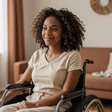
I am a wheelchair user, a Black queer woman, and autistic. I had given up on dating apps entirely. Here, I did not have to pick one identity to lead with. I could just be Maya. That alone changed everything.
As an autistic guy, the first dates always went sideways because I would miss some social cue and get ghosted. Here, the mood tags and written profiles told me more in five minutes than five dates ever did. We met in person after a month of slow messages. That was two years ago.

I am Deaf and my partner is hearing. On mainstream apps, hearing men either ignored me or treated ASL like a novelty. Here, Ryan messaged me in video with a little sign he had been practicing. That was the whole first chapter of our story.

The questions we hear most often from people joining a disabled dating site for the first time. For more, visit our full FAQ.
Yes - several. The most established options in 2026 are Dateability, Special Bridge, AbiliMatch, Hiki (neurodivergent-focused), and easy dating. Unlike Tinder, these platforms are designed accessibility-first: screen-reader compatibility, optional disability disclosure, anti-devotee policies, and verification built in. We focus on unhurried, intentional connection rather than swipe-based matching.
Yes. easy dating is free to join with no credit card required. Core features - profile creation, browsing the community, sending messages, video verification, and safety tools - are all free forever. Optional premium verification badges exist for members who want extra trust signals, but you never need to pay to find a partner here.
Absolutely. Disabled adults have the same right to romantic, sexual, and emotional partnership as anyone else. The only thing that is not okay is fetishizing a disability (called being a devotee) or pursuing someone because you want to feel like a hero or caregiver. A good partner values the whole person - including resilience, humor, and the ways disability shapes life - without framing them as a project.
Every profile passes selfie-video verification with human review before becoming visible. Messaging happens inside the app only, so you never share a phone number until you choose to. Our moderation team reviews reports within 24 hours, blocks devotees on sight, and flags classic romance-scam patterns (fast declarations of love, money requests, overseas emergencies). Read more on our Safety & Privacy page.
No. Disclosure is always optional. You can use our Dateability-style disclosure panel to share as much or as little as you want - mobility aids, communication preferences, chronic conditions, neurotype - or leave it blank. Many members start private and open up only when a match feels right. Your pace, your story.
Anyone 18 or older who is disabled, chronically ill, neurodivergent, Deaf, blind, a little person, or an ally genuinely interested in inclusive dating. We welcome every race, gender identity, sexual orientation, and relationship structure. Devotees, fetishizers, and people seeking to "fix" a disabled partner are not welcome and are removed when identified.
Three big differences: (1) disability is normalized from sign-up, so you never have to "come out" as disabled to every new match; (2) the platform meets WCAG 2.1 AA accessibility standards, so screen readers, keyboard navigation, and captions all work natively; (3) we deliberately avoid swipe-driven engagement loops - matches unfold through short stories, mood tags, and messages instead of hot-or-not decisions in half a second.