Amputee Dating Community

Amputee dating grounded in confidence and consent

An amputee dating site for AKA, BKA, AE, and BE members - traumatic, congenital, dysvascular, or elective - and for the partners who already know a person is not defined by what they are "missing." Free forever. Verified profiles. Devotees removed on sight. No pre-rejecting yourself on anyone's behalf.

  • Verified
  • Devotee-free
  • Unhurried
  • Whole-person
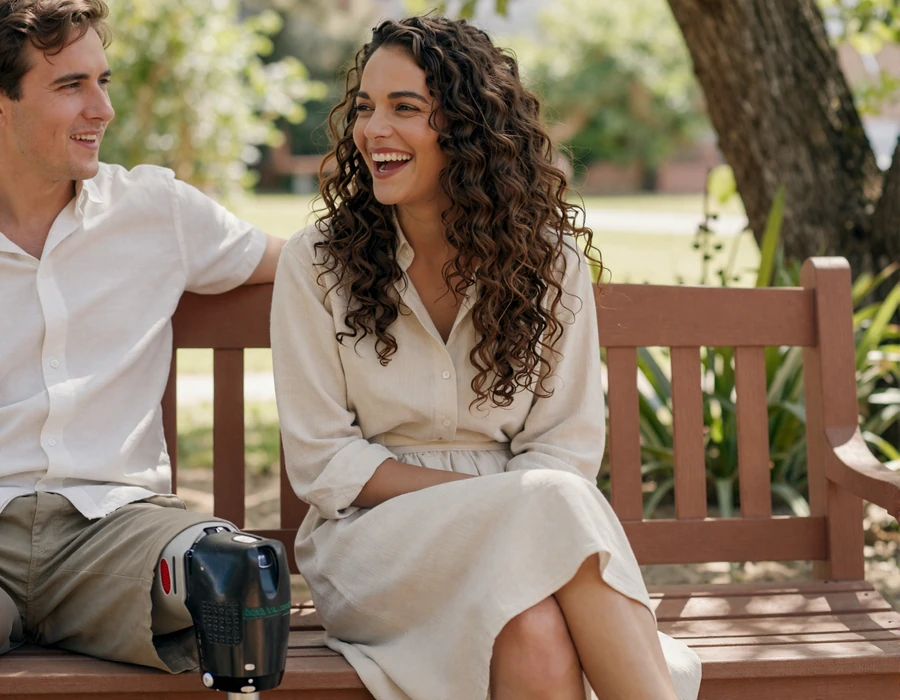
Mixed-race woman below-knee amputee laughing with her partner on a sunlit garden bench - authentic amputee dating connection
Community overview

A welcoming amputee dating website community

The amputee dating community is larger than most people - including most amputees - realize. The Amputee Coalition's 2024 prevalence study with Avalere Health found that more than 5.6 million Americans are currently living with limb loss or limb difference, a figure that triples earlier estimates. Globally, over 10 million people live with limb loss. If you have ever felt like the only amputee in every room of every mainstream dating app, the number itself is a quiet corrective: you are not rare. You have been under-served.

Our members arrive from every path to amputation. Traumatic limb loss from accidents or military service. Dysvascular amputation from diabetes or vascular disease. Congenital limb difference. Elective amputation to end years of pain. They are prosthetic full-timers, part-time prosthetic users, and members who prefer not to wear a prosthesis at all. Some are years into rebuilding; some are months post-op and testing the dating waters for the first time since the hospital.

5.6M Americans living with limb loss or limb difference (Amputee Coalition & Avalere Health, 2024)
62% Of amputees delayed re-entering dating for over a year after limb loss due to family stigma (Amputee Coalition, 2024)
10M+ People worldwide living with limb loss

What makes an amputee dating website different from a mainstream swipe app is not a feature list - it is the baseline assumption. Here, limb loss is normalized from sign-up. Members do not need a "field" that does not exist on Hinge to declare themselves; they do not need to wonder if a prosthetic photo will cut their matches in half. The slow, private work of re-learning that you are still desirable - work that research in PLOS ONE shows is statistically harder for lower-limb amputees (p<0.001 for lower body image scores vs controls) - happens faster when the room you walk into already knows.

For the broader picture of how we build this kind of space, see our About page or the full platform mechanics on How It Works.

Disclosure at your pace

Disclosure strategies that feel like you

There is no single correct way to disclose an amputation. There is only the way that fits your energy, your timing, and your next conversation. Here are three approaches our members use most often - all valid, all reversible.

1

Lead with the prosthesis

Show a clear prosthetic or limb-difference photo in your profile. You lose the mid-chat disclosure anxiety entirely, filter for comfort from the first tap, and skip straight to the people who were always going to be a match. Many AKA and AE members prefer this as their permanent setting.

2

Middle ground

Omit prosthetic photos but mention your amputation in your bio - one calm sentence, no apology. You get the room to be seen as a person first, with no deception risk. A documented pivot many amputees describe after their "all-or-nothing" approach burned them out.

3

Connection first, disclosure second

Build a conversation, find shared energy, then share in voice or video before meeting. Best when trauma from mainstream apps is still fresh, or when the ability to be seen without the limb difference framing matters for your confidence right now.

The built-in advantage of an amputee dating site

On a shared-experience platform, disclosure anxiety shrinks before you ever type a word. Both parties already know, in advance, that limb difference is part of the room. Community resources like Able to Love You describe this as "pre-introduced" - the conversation can start where it belongs, not at an explanation.

For the deeper playbook on disclosure timing across conditions, read our inclusive dating advice guide and the communication in relationships guide.

Confidence rebuilt

Confidence after limb loss

The first year after an amputation is rarely a dating year. The Amputee Coalition's 2024 survey found 62% of amputees delayed re-entering dating for over a year, not because they didn't want to, but because family stigma and their own healing timeline needed the space. That is normal. That is not a failure to "bounce back."

Research in Scientific Reports found a statistically positive correlation between physical activity and body image in lower-limb amputees. Adaptive sports, physio, a long walk with the new prosthesis, even small victories with daily routine - they quietly rebuild the part of self-esteem that dating leans on. You do not need to feel "ready" in the Instagram sense. You need to feel steady enough to hear a stranger say you are lovely and believe them.

"Love after limb loss looks like takeout on flare days, laughter through uncertainty, and a partner who knows where the liner bag lives. Find someone who values your wholeness - not someone who 'doesn't mind.'" - Wholeness principle, drawn from the amputee dating community

One mindset shift our members come back to most: stop pre-rejecting people on your behalf. Assuming rejection before someone has had a chance to respond is a habit the first hard year can build into you. On a platform where the room already knows about the amputation, that habit starts to unlearn itself. Thousands of amputees maintain fulfilling romantic relationships after limb loss - research on the same studies notes that partners are "often more accepting and adaptable than anticipated."

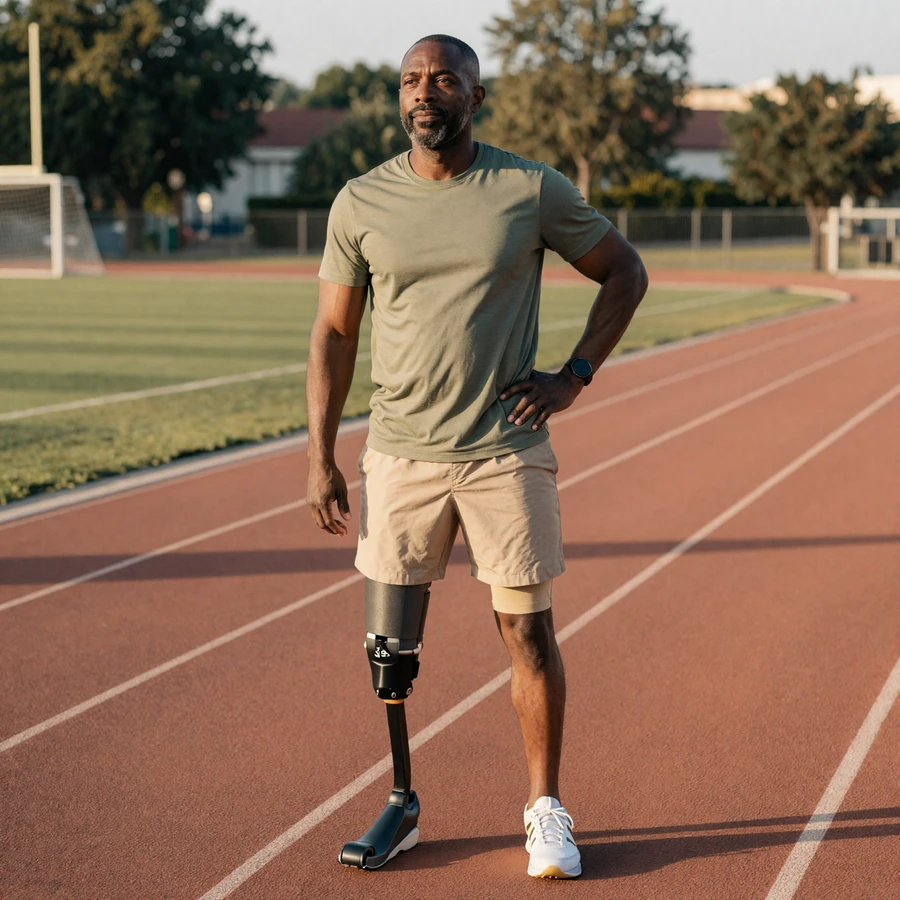
African American man above-knee amputee with running blade stretching on a sunlit track - confidence after limb loss
  • Small movement counts. Adaptive yoga, a pool session, a block further than yesterday - all statistically linked to improved body image in lower-limb amputees.
  • Peer community first, dating second. Members who join a peer support space (Amputee Coalition, local limb-loss group, online community) before dating report faster confidence rebuild.
  • Replace "despite" with "with." You are not dating despite your amputation. You are dating with it. Language shapes self-image faster than most people expect.
  • Go at your own pace. A year of no dating is not a wasted year. It's a foundation.
Safety first

Our anti-devotee policy explained

Amputee-specific fetishization - often called "devoteeism" - is one of the most persistent hazards on mainstream platforms. It is not attraction, it is not admiration, and it is not curiosity. It is a pattern of treating limb loss as the entire point, reducing a whole person to the stump, the prosthesis, or the amputation story. Every member of this community deserves protection from it, and we take that seriously.

Red flags we act on

  • Requests for specific photos of the residual limb, prosthesis, or socket - especially early in conversation.
  • Sexualized questions about the amputation, phantom limb sensations, or the limb-loss event.
  • Opening messages that focus entirely on the limb difference and ignore everything else in the profile.
  • Language copied from known devotee forums, or references to "devotee" / "pretender" / "wannabe" identities.
  • Pressure to disclose private medical details (level of amputation, surgery history) before trust is built.

The founders of similar inclusive platforms, like Dateability, have publicly stated that they actively remove profiles that cross into devotee behavior. We do the same. Accounts flagged for fetishization are reviewed within 24 hours and removed without warning when the pattern is clear. Blocked users cannot recreate accounts on the same device. Members never owe anyone an explanation - trust your instincts, and use the report button early.

AbiliMatch and other community resources echo the same advice: genuine respect and interest are essential; keep early meetings public; and anyone who treats your disability like "an exotic hobby" is telling you who they are. Listen the first time. Full details live on our Safety & Privacy page, and scam patterns are covered in the online dating safety tips guide.

Language matters

AKA, BKA, AE, and BE: terminology used in our community

Standardized shorthand helps profiles communicate clearly without turning every first message into a medical interview. These are the terms you will see most often in amputee dating community profiles, including those on AbiliMatch and similar platforms.

Abbreviation Plain-language meaning What it often shapes in dating
AKA Above Knee Amputation - amputation of the leg above the knee joint. Often involves a socket prosthesis; seated-first date venues, elevator access, and fatigue pacing matter.
BKA Below Knee Amputation - amputation of the leg below the knee. Typically higher mobility with a prosthesis; most date venues work with minor accessibility vetting.
AE Above Elbow Amputation - amputation of the arm above the elbow joint. Myoelectric or body-powered prostheses are common; handedness and shared tasks may shift.
BE Below Elbow Amputation - amputation of the arm below the elbow. High day-to-day function; partners often adapt naturally to small shared-task changes.
Bilateral Amputation on both sides - for example, bilateral BKA (both legs below the knee). Transport and venue planning carry more weight; home dates and accessible transit are frequent wins.
Congenital limb difference Limb difference present from birth, rather than acquired. No "before and after" narrative - many members prefer the term "limb difference" over "amputee."
Dysvascular Amputation caused by vascular disease, often diabetes-related. May be paired with other health factors; a partner who respects energy limits matters most.

Terms are tools, not identities. Use whichever feel right - "amputee," "person with limb loss," "person with limb difference." Our bio fields support all of them, and our search filters respect whichever you choose.

Real stories

Real stories from amputee members

People come here to be seen for who they are, not what they are missing. Two short reflections from members who built something real on easy dating.

Mainstream apps taught me to pre-reject people. I'd delete matches before they deleted me. Here the room already knew about my BKA, so my first conversation with Ravi was about bookshops. Six months later, that is still what we argue about most.

Priya, a below-knee amputee member, smiling softly in warm window light
Priya, 37 BKA · two years post-amputation · Austin, TX

I lost my arm in 2019 and spent three years convinced dating was over. The first thing I noticed on this site was how many profiles just… mentioned it and moved on. It sounds small. It was not small. It was permission to be a whole person again.

Dominic, an above-elbow amputee veteran, smiling warmly in natural daylight
Dominic, 46 AE · veteran · Tacoma, WA

Read longer success stories from our amputee members →

Questions & answers

Amputee dating questions

The questions we hear most from members joining an amputee dating website for the first time.

  • What are the best amputee dating sites in 2026?

    The most active amputee-friendly platforms in 2026 include easy dating, Dateability, AbleSingles, AbiliMatch, AmputeeLove, MPWH (My Partner With History), and SingleDisabled.com. They differ in tone - some lean community-first, others lean dating-first - but all normalize limb loss from sign-up, unlike mainstream apps where amputee profiles are routinely overlooked.

  • Should I show my prosthesis or limb difference in my profile photos?

    It is entirely your choice, and a reversible one. Showing a prosthesis or limb-difference photo filters for partners who are comfortable from the start and removes mid-chat disclosure stress. Omitting it lets connection develop first. Many members describe trying the all-or-nothing approach, burning out, and settling into a middle ground - no prosthesis photos, one calm line in the bio. There is no wrong answer.

  • How soon after an amputation is it normal to start dating again?

    The Amputee Coalition's 2024 survey found 62% of amputees waited over a year before re-entering dating - most often because of family stigma and personal healing, not lack of desire. A year is normal. Two years is normal. Three weeks is also normal if you feel steady. There is no clinically correct timeline, only the one that fits your recovery.

  • How does easy dating enforce its anti-devotee policy?

    Every profile passes selfie-video verification before going public. Accounts showing devotee-pattern behavior - early requests for residual-limb or prosthesis photos, sexualized questions about the amputation, language from devotee forums - are removed within 24 hours of a report. Blocked users cannot recreate accounts on the same device. Members never have to justify a block.

  • Is easy dating free for amputee members?

    Yes. Profile creation, browsing, messaging, verification, and all safety tools are free forever with no credit card required. Optional premium verification badges exist for members who want an extra trust signal, but they are not needed to meet anyone.

  • What does AKA, BKA, AE, and BE mean on profiles?

    AKA is Above Knee Amputation, BKA is Below Knee Amputation, AE is Above Elbow, and BE is Below Elbow. They are standardized shorthand used on amputee dating sites like AbiliMatch so members can communicate clearly about limb difference without having to explain in every message. Using them in your bio is entirely optional - plain language works equally well here.

  • My partner is not an amputee. Can they join with me?

    Yes. Ally, interabled, and non-amputee members are fully welcome - the only requirement is genuine respect. Our myth-busting guide and communication guide are good reading for partners new to this space.

Amputee dating, without the pre-rejection

Join an amputee dating site where limb loss is already normal - and where the conversation can finally start with you.

Free forever · No credit card · Delete your account anytime