ASL and sign language
Native and fluent signers who prefer ASL (or BSL, LSQ, and other sign languages) for video calls and in-person dates. Hearing members willing to learn a few signs - or already signing - are warmly welcome here.
A deaf dating site for culturally Deaf adults, hard-of-hearing singles, late-deafened members, and the hearing partners who show up with genuine curiosity - not pity. ASL, BSL, lip-reading, captions, or text: you set the communication preference, and it travels with your profile. Free forever. Verified. Devotee-free.
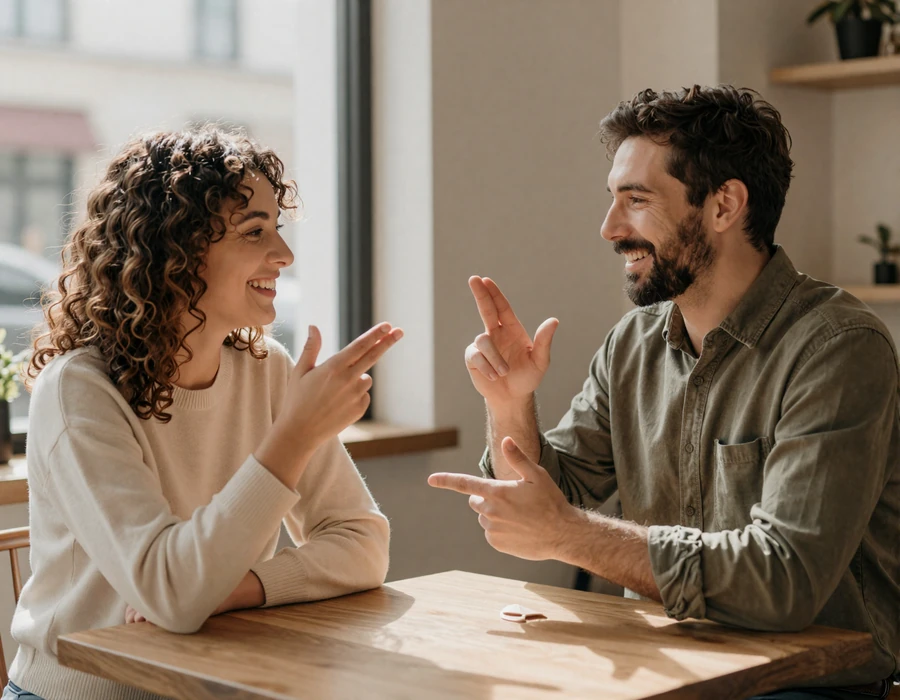
A deaf dating site works only when it understands one thing clearly: for many culturally Deaf people (capital D, by community preference), deafness is not a deficit to accommodate. It is a language, a community, and a cultural identity - with its own art, humor, schools, theater, and centuries of shared history. American Sign Language is a fully formed natural language, recognized as such by linguists since William Stokoe's research in the 1960s, and is the third most-used non-English language in U.S. homes according to U.S. Census estimates.
The stereotype that Deaf people are socially isolated is not only harmful, it is demonstrably false. Deaf communities are some of the most socially vibrant in the country - Deaf clubs, ASL poetry slams, Deaflympics, Gallaudet and NTID alumni networks, DeafNation expos, and a tight mesh of local chapters keep calendars full. Hearing partners who enter this space with openness often describe it as the most connected social world they have ever joined.
"Deaf people are active in communities celebrating Deaf culture, art, and shared experiences, and many navigate both hearing and Deaf worlds with ease." - Deaf community guidance, echoed by DeafSinglesUSA and RNID
At the same time, our members are a spectrum. Some are oral-deaf, raised with lip-reading and speech therapy; some are native ASL signers from Deaf families; some are late-deafened adults navigating cochlear implants in their forties; some are hard-of-hearing and comfortable in hearing spaces with hearing aids. There is no single "Deaf experience," and profiles on easy dating reflect that - with communication preferences, identity notes, and mood tags that carry into every conversation so members don't have to explain themselves five times a week.
For the wider picture of how we build inclusive dating spaces, see our About page and How It Works.
Every member sets a communication preference on their profile. It appears in search filters, shows up next to their name in messages, and means the very first exchange can skip the awkward "how should we talk?" dance. AbiliMatch and DeafSinglesUSA both recommend stating preferences upfront - we just built it into the platform.
Native and fluent signers who prefer ASL (or BSL, LSQ, and other sign languages) for video calls and in-person dates. Hearing members willing to learn a few signs - or already signing - are warmly welcome here.
Oral-deaf and hard-of-hearing members who prefer face-to-face conversation in well-lit, quieter rooms. Partners learn quickly: face the person, keep hands away from your mouth, and speak naturally without shouting.
Captioned video calls, live-transcription apps (Ava, Otter, Google Live Transcribe), and text-first dating are first-class here. Many members mix all three and call it a night. No tool is "second best."
"I'm Deaf and prefer ASL or captioned video - how about you?" is all it takes to start. AbiliMatch flags this as the single biggest reduction in first-date miscommunication: state your preference early, ask theirs, move on.
For deeper communication guidance across conditions, our communication in relationships guide is a good next read, and the accessibility in dating guide covers platform-level features.
Deaf-hearing relationships work. They work well. They work for decades. What they need is not magic - they need the same three things any good relationship needs, just more visibly: clear communication, patience, and mutual respect.
The most common worry from hearing partners is "do I have to become fluent in ASL?" The answer is no. Learning is welcome and deeply appreciated, but many successful Deaf-hearing couples mix ASL basics, lip-reading, written notes, captioned video, and live-transcription apps depending on the moment. The question is not which mode, it is are you willing to adapt. DeafSinglesUSA puts it simply: treat deaf dating the way you would learning about any other culture - with curiosity, openness, and a small amount of homework.
The most common worry from Deaf partners is the reverse: "will this hearing person ever really get it, or am I in for another year of being left out at family dinners?" A good platform filters hard for that answer. Profiles here include interpretation preferences, captioning expectations, and whether a member is looking for fluent ASL, a learner, or either. The filters do the first round of work so your energy can go into the second.
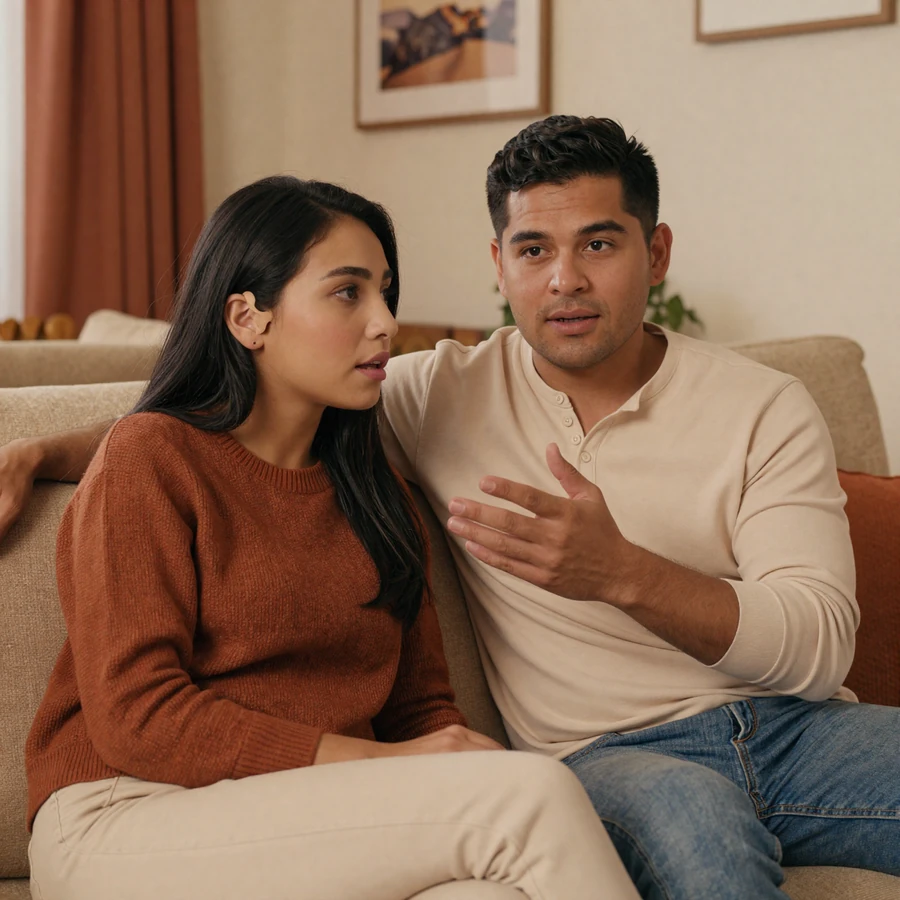
A good first date for a Deaf or hard-of-hearing person is not fancy - it is legible. Good light, low background noise, room to face each other, and a plan that does not depend on a server shouting over music. AbiliMatch's advice is short and correct: state your communication preference upfront, and choose a venue that makes it easy.
One sentence in your confirmation message: "Just so we're on the same page - I lip-read best in quiet rooms, and I use Ava on my phone for backup." Your date now arrives prepared instead of improvising.
Bright cafés with window seats, quieter bookstores, museum mornings, a garden bench with coffee. Avoid loud bars, dim basement restaurants, and live-music venues for a first meeting. Save those for date three, when you already know how to work together in noise.
Zoom, Google Meet, and FaceTime all support live captions now. A 30-minute captioned video call before meeting in person saves travel, lowers stakes, and lets you see whether their communication style actually fits yours - not just whether they say it does.
Phone open to a transcription app, notes app ready, captioning turned on in the movie - these are not awkward workarounds, they are how modern dating works for millions of Deaf adults. A partner who adapts without fuss is telling you something important.
For members who prefer sign, walks are tricky. Pick a stroll with planned stop points - a bench every ten minutes, a photo-worthy viewpoint - where you can pause and actually talk. It turns an awkward format into a lovely one.
A 2024 Disability Horizons piece (originally 2019, refreshed) named six misconceptions that still follow Deaf daters around. Here they are - with the version that actually matches how our members live.
| The myth | What Deaf daters actually say |
|---|---|
| "Communication will be too hard." | Communication is different, not difficult. Between ASL, lip-reading, texting, and captioning apps, the toolset is richer than most hearing couples ever use. |
| "Deaf people only date other Deaf people." | Many do, many don't. Deaf-hearing relationships are common, successful, and often deeply curious about each other's worlds. |
| "There's nothing to do on a date." | Museums, hikes, captioned cinemas, cooking, bookstores, galleries, game nights, concerts with signed interpretation - activities are not limited; imagination is. |
| "I'll have to become fluent in sign language." | Fluency is not required. Willingness to learn basics and use captions is. Many successful hearing partners stay at conversational-beginner ASL for years. |
| "Deaf people are socially isolated." | The opposite is usually true. Deaf clubs, Deaflympics, Gallaudet networks, DeafNation, ASL poetry - a hearing partner often gains community, not loses one. |
| "They want sympathy for being Deaf." | They want respect, equality, and someone who adapts without making a performance of it. Sympathy is the fastest way to be un-matched. |
For more of this kind of unlearning across the full community, see our myths about disability and relationships guide.
A handful of members who have given permission to share their profiles. Names changed, photos authentic, communication preferences as they set them.
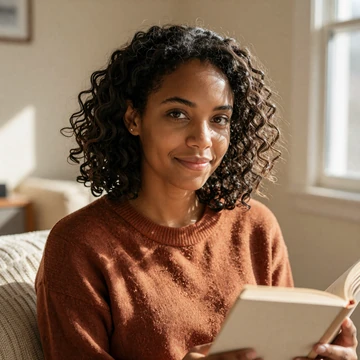
Austin, TX
Deaf since birth, ASL-first, hearing-world fluent when I want to be. Looking for someone who meets me in language, not through an interpreter.

Brooklyn, NY
Hard-of-hearing, hearing aid user, lip-read best in quiet rooms. Captions always on. I will learn whatever sign vocabulary a partner wants me to.

Seattle, WA
Late-deafened at 36. Cochlear implant user. Text and captioned video are my favorites. Ceramicist by trade, patient by practice.
Voice intros, screen-reader-first profiles, and audio-first communication for blind and visually impaired singles.
Identity-first, sensory-aware dating for autistic adults and partners who value directness.
WCAG, accessible venues, adaptive tools, and interabled etiquette across the whole platform.
The questions we hear most from Deaf and hard-of-hearing members joining a deaf dating site for the first time.
The same way you flirt with anyone - with eye contact, attention, and genuine interest - adapted to their preferred language. For ASL-first members, that means using your face (facial expression is grammar in ASL, not extra), keeping eye contact, and being expressive with your hands. For lip-readers, it means facing them, good lighting, and unhurried delivery. Text flirting works beautifully for everyone. The one thing to avoid: treating deafness itself as the flirt - "I love that you can't hear me snore" lands exactly as badly as you think.
Deaf communities are very socially active. Common spaces include local Deaf clubs, ASL meet-ups (Starbucks ASL nights are a long tradition in many cities), Deaflympics and Deaf sports leagues, Gallaudet and NTID alumni networks, DeafNation expos, ASL poetry slams and Deaf theater, and church or synagogue Deaf ministries. Online, deaf dating sites like easy dating exist precisely because offline social spaces - bars, loud venues, cold-approach situations - often lack Deaf accessibility, making them harder starting points.
No. Lip-reading, written messages, and captioned video calls are all valid. Many Deaf-hearing couples thrive with the hearing partner at a conversational-beginner ASL level. What matters is willingness to adapt - learning a few core signs, keeping captions on by default, and respecting Deaf culture. Fluency is a wonderful gift over time, not an entry ticket.
State your communication preference clearly and briefly: "Deaf, ASL-first, open to hearing partners willing to learn" or "Hard-of-hearing, lip-read best in quiet rooms, captioned video is great." Include a mix of profile photos (one clear face shot helps lip-readers on video intros later), your mood tags, and at least one thing you actually want to talk about. AbiliMatch research consistently shows that the clearer the preference, the higher the match quality.
Yes. Profile creation, browsing, messaging, selfie-video verification, and every accessibility feature are free forever with no credit card required. Optional premium verification badges exist for members who want an extra trust signal, but they are never required to meet anyone.
All video intros support captions, profiles carry communication-preference tags that travel into messaging, search lets you filter by preferred language (ASL, BSL, lip-reading, text-first), and video verification accepts ASL signed introductions in place of spoken ones. Our Safety & Privacy page covers the moderation workflow in full.
Yes. Hearing allies, partners of Deaf members, and hearing singles open to dating Deaf or hard-of-hearing people are fully welcome - with one expectation: genuine respect for Deaf culture, not curiosity treated as a hobby. Our myths guide is a useful first read.